Your Name (Kimi no Na wa): A Complete Guide to Makoto Shinkai’s Masterpiece
Updated: 2024 | Reading time: approx. 12 min | Tags: Anime, Japanese Cinema, Makoto Shinkai, Romance
In the summer of 2016, a quiet animated film from Japan rewrote the record books. Your Name (君の名は。, Kimi no Na wa.), directed by Makoto Shinkai, became the highest-grossing anime film in history at the time — earning over ¥23.6 billion at the Japanese box office alone and screening in more than 180 countries.
Yet the numbers tell only part of the story. What truly set Your Name apart was the way it made audiences feel: dazzled by its visuals, moved by its music, and haunted by an ache they couldn’t quite name — the feeling of longing for someone they’d never met.
If you’re curious about what makes this film so extraordinary, or if you’re preparing to watch it for the first time, this guide covers everything you need to know: the story, the themes, the cultural context, and why it continues to resonate with audiences around the world.
What Is Your Name? — Plot Overview (Spoiler-Light)
At its heart, Your Name is a body-swap story — but don’t let that fool you into thinking it’s a comedy.
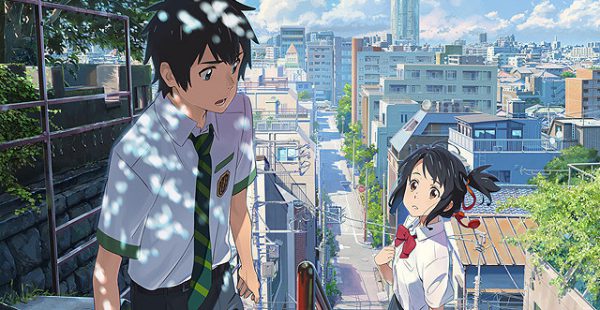
The film follows two teenagers living very different lives. Mitsuha Miyamizu is a high school girl in the small, fictional mountain town of Itomori, nestled in the Japanese countryside. She longs to escape her quiet, traditional life and dreams of being a boy in Tokyo in her next reincarnation. Taki Tachibana is a high school boy living in the heart of modern Tokyo, juggling part-time work and a crush on his older coworker.
One morning, without any warning or explanation, they begin waking up in each other’s bodies. On alternating days, each finds themselves living the other’s life — navigating school, friendships, and family in an unfamiliar world. They leave notes for each other on their phones, establishing a fragile system of coexistence.
Then, abruptly, the swapping stops. And when Taki tries to find Mitsuha — to meet her in person for the first time — he discovers that something is terribly, heartbreakingly wrong.
Around the film’s midpoint, Your Name reveals a twist that reframes everything the viewer has seen. Without giving it away: the story is not quite what you thought it was. This structural turn is one of the most discussed moments in modern anime, and it elevates the film from charming romantic fantasy to something altogether more profound.
Why Your Name Became a Global Phenomenon
1. Visuals That Look Like Paintings
From its opening frames, Your Name announces itself as something visually extraordinary. Director Shinkai and his studio, CoMix Wave Films, are renowned for their obsessive attention to light and atmosphere — and this film represents the peak of that craft.
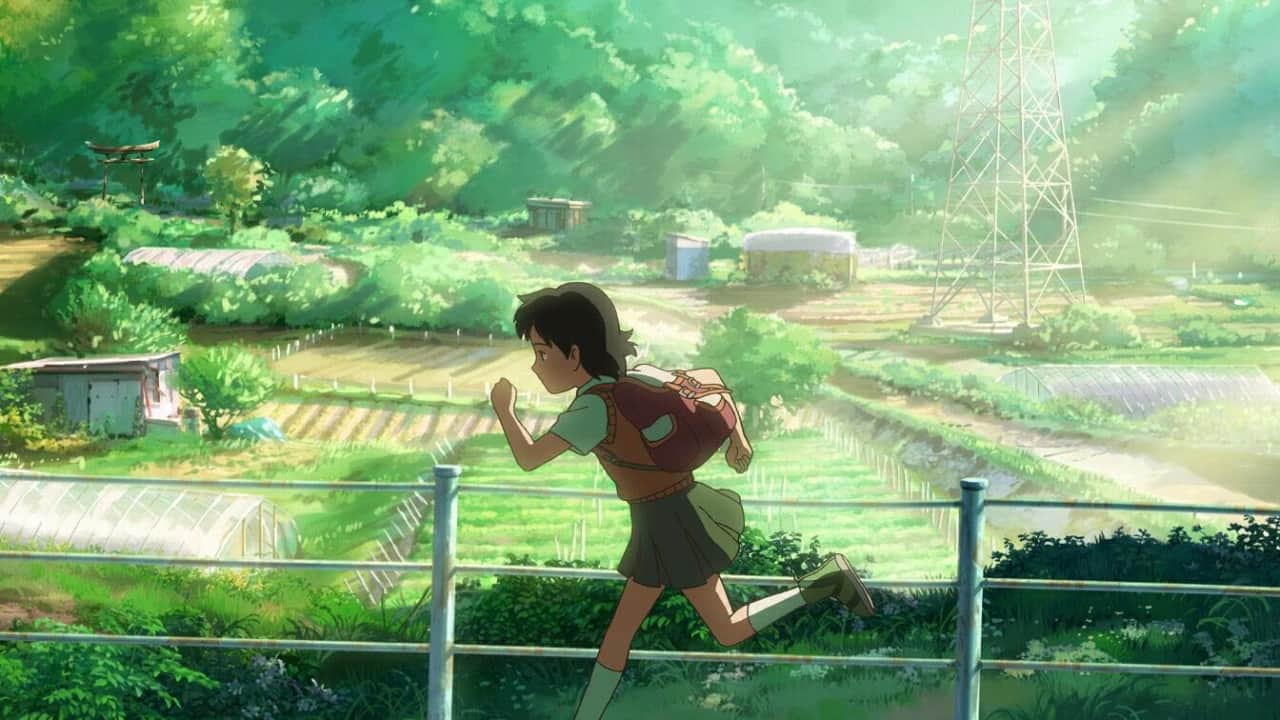
The Tokyo sequences pulse with the energy of a living city: rain-slicked streets reflecting neon signs, rush-hour trains, late-afternoon light filtering through office buildings. The countryside scenes breathe with a different beauty — misty lake mornings, terraced rice fields, the vast silence of mountain forests at dusk.
But the film’s most iconic imagery is reserved for the sky. The comet that appears throughout the story — and which plays a crucial role in the plot — was reportedly animated over the course of months, and it shows. Few animated sequences in cinema history are as purely beautiful as the comet scenes in Your Name.
Shinkai’s style is sometimes described as “more beautiful than real life” — a kind of hyperrealism that heightens the emotional temperature of every scene. Even a simple shot of sunlight through curtains feels charged with meaning.
2. The Music of RADWIMPS — A Score That Tells the Story
Japanese rock band RADWIMPS, led by songwriter Yojiro Noda, composed the film’s entire musical score — an unusual choice that paid off magnificently. Rather than treating music as background texture, Shinkai integrated the songs directly into the narrative, using them almost as a form of internal monologue.
The result is a soundtrack that functions like a second screenplay. Tracks such as Zenzenzense (前前前世, meaning “the previous previous previous lifetime”) and Sparkle (スパークル) don’t just accompany scenes — they carry them. Many viewers report that hearing the soundtrack again after seeing the film triggers an immediate emotional response, as if the music has been encoded with the film’s feelings.
Both the Japanese-language songs and the film’s orchestral score became international hits. Your Name is widely credited with introducing RADWIMPS to a global audience and remains one of the most celebrated film soundtracks in recent anime history.
3. The Structural Twist — A Story Hiding Inside the Story
Part of what makes Your Name so rewatchable is its architecture. On first viewing, the body-swap premise feels like the story. Then, about halfway through, the film quietly reveals that the real story has been hiding underneath all along.
This twist does not rely on shock value or narrative sleight of hand. It emerges organically from details planted throughout the first half — which means that on a second viewing, the film becomes a completely different experience. Scenes that seemed lighthearted reveal a devastating undercurrent; moments of comedy become heartbreaking in retrospect.
This quality — the sense that the film rewards attention and patience — is one reason Your Name generated unusually high repeat viewership in Japan, with many audience members buying multiple tickets to see it again and again in theaters.
4. Universal Emotional Resonance
Despite its deeply Japanese setting, Your Name taps into feelings that transcend cultural boundaries. The film is, at its core, about a specific kind of longing: the feeling of searching for someone — or something — without quite knowing what you’re looking for. The Japanese word natsukashii (懐かしい) comes close: a bittersweet nostalgia for something you may never have fully possessed.
The film suggests that some connections between people exist outside ordinary time and memory — that we can miss someone we’ve never met, and love someone we can’t remember. This is the feeling that audiences in China, the United States, France, and dozens of other countries reported experiencing. It is why the film’s climax, which involves two people running toward each other at dusk while trying desperately to remember a name, has been described as one of the most moving sequences in contemporary cinema.
5. A Love Letter to Two Japans
One of the quieter pleasures of Your Name is the way it depicts Japan with genuine affection in both its registers. Tokyo is rendered not as an abstract symbol of modernity but as a lived, breathing city — specific train lines, specific neighborhoods, specific cafés. Viewers who know Tokyo have pointed out how faithfully the film captures the texture of daily urban life there.
Equally, the fictional town of Itomori draws on the traditions and landscapes of rural Japan with real care. The local shrine, the festival, the community rituals — these are not exotic backdrop but central to the film’s meaning. In Shinkai’s vision, neither Tokyo nor the countryside is superior; they are two halves of the same country, and the film’s two protagonists are its complementary souls.
Understanding the Cultural Depth — Key Concepts for Non-Japanese Viewers
Musubi (結び) — The Thread That Connects All Things
Early in the film, Mitsuha’s grandmother, Hitoha, explains the Shinto concept of musubi. The word literally means “connection” or “binding,” but it carries layers of meaning that translation struggles to capture. It refers to the twisting of threads into cord, to the flow of time itself, and to the joining of people across distance and circumstance.
This concept is the philosophical backbone of the entire film. The red braided cord that Mitsuha weaves and wears — and which later becomes the thread literally binding her to Taki — is a physical manifestation of musubi. It is the film’s argument that invisible connections between people are real, even when we cannot see or name them.
For viewers unfamiliar with Shinto philosophy, this sequence is worth paying close attention to. Hitoha’s explanation is not exposition — it is the key to understanding why the film ends the way it does.
Kumihimo (組紐) — The Art of Braided Cords
Kumihimo is a traditional Japanese craft of braiding silk threads into decorative cords, historically used in samurai armor and formal dress. In the film, Mitsuha’s family shrine specializes in this tradition, and the braided cord she makes by hand becomes one of the story’s central symbols.
The film uses kumihimo to make a metaphor tangible: a braid is made of threads that cross and intertwine, never running parallel. Like the lives of Taki and Mitsuha, the threads of a braid must cross — must give up their individual path — in order to create something stronger together.
Kuchikamizake (口噛み酒) — Sacred Sake
In one of the film’s more unusual sequences, Mitsuha and her sister perform a Shinto ritual at their family shrine that involves making kuchikamizake: sacred sake produced by chewing rice and allowing enzymes in saliva to begin fermentation. This practice is rooted in actual ancient Shinto tradition and carries deep ceremonial significance in the context of the story.
This detail is one of many ways the film rewards viewers who approach it with curiosity. What might seem like an odd comedic moment is, in fact, one of the most important ritual acts in the entire narrative.
The Comet and Shinto Cosmology
The comet that appears throughout Your Name is not merely a dramatic plot device. In Shinto tradition, extraordinary celestial events are understood as messages or manifestations of divine will. Shinkai uses the comet to connect his story to a larger conception of fate — the idea that extraordinary events in the sky correspond to extraordinary events in human lives, and that the two realms are not as separate as they might seem.
Makoto Shinkai — Who Is the Director?
Born in 1973 in Nagano Prefecture, Makoto Shinkai began his career making one-person animated films — literally producing every frame himself, including backgrounds, animation, and editing. His 2002 short film Voices of a Distant Star (ほしのこえ), made entirely solo, established his reputation for emotionally intense stories about separation and longing.
Over the following decade, Shinkai developed a distinctive body of work — including The Place Promised in Our Early Days (2004) and 5 Centimeters Per Second (2007) — that earned him a devoted following in anime circles. His films were celebrated for their extraordinary visual quality but sometimes criticized for their emotional bleakness: his protagonists frequently ended up apart rather than together.
Your Name represented a turning point. It retained all of Shinkai’s visual ambition and emotional depth, but added a more hopeful, accessible story — one that could move audiences who had never watched anime before. The result was a film that crossed every demographic and cultural boundary it encountered.
Critics and fans often draw comparisons to Hayao Miyazaki of Studio Ghibli, whose films — Spirited Away, My Neighbor Totoro, Princess Mononoke — represent the gold standard of Japanese animation for most international audiences. Shinkai himself has consistently resisted the comparison, noting that his interests and methods are different. While Miyazaki builds worlds of adventure and wonder aimed at universal audiences, Shinkai specializes in a more particular, adult register: the ache of distance, the fear of forgetting, and the possibility — not always realized — of reunion.
Since Your Name, Shinkai has continued with equal ambition. Weathering With You (天気の子, 2019) and Suzume (すずめの戸締まり, 2022) both performed extraordinarily well internationally, confirming his place among the most significant filmmakers working in animation today.
How to Watch Your Name — A Practical Guide
Subtitled (Sub) or Dubbed (Dub)?
Both the Japanese original with English subtitles and the English dub are high quality, and this is genuinely a matter of personal preference. That said, there are reasons the subtitled version is widely recommended for first-time viewers.
Most significantly, Mitsuha speaks with a Kansai-inflected dialect that signals her rural origins and her family’s traditional background. This dialect is part of her characterization — it marks her as different from Taki’s urban Tokyo speech, and it’s used for comic effect when Taki, in Mitsuha’s body, accidentally uses her dialect in Tokyo. Dubbing necessarily flattens this distinction.
Additionally, the film’s songs by RADWIMPS are in Japanese, and even in subtitled versions their melody and emotional weight come through fully. The dub replaces the Japanese-language songs with instrumental versions in some releases.
Watch It in a Single Sitting
At 106 minutes, Your Name is designed as a single unbroken emotional experience. The film builds carefully, and its impact depends on the accumulated tension of its first hour paying off in its final thirty minutes. Pausing or splitting the viewing disrupts this rhythm. If possible, find a quiet evening and commit to it start to finish.
No Prior Anime Knowledge Required
Your Name is widely considered one of the most accessible entry points into Japanese animation. It does not require familiarity with anime conventions or Japanese culture to be appreciated — though knowing the concepts described in this guide will enrich the experience considerably. Viewers who have never watched anime before regularly describe it as one of the most beautiful films they have ever seen.
Where to Stream
Availability varies by region, but Your Name is typically available on Netflix, Amazon Prime Video, and Crunchyroll in most major markets. Check your local streaming platform for current availability.
The Legacy of Your Name — Seven Years On
Nearly a decade after its release, Your Name continues to hold a remarkable position in global popular culture. It remains one of the highest-grossing anime films of all time, is taught in university film courses worldwide, and has inspired a generation of animators and filmmakers both inside and outside Japan.
In China, the film’s release in 2016 sparked a genuine cultural moment, with audiences lining up for hours and critics describing it as the film that proved anime could speak directly to non-Japanese audiences. In the United States, it helped fuel a broader mainstream interest in Japanese animation that has continued to grow.
Perhaps most remarkably, the film continues to be discovered by new audiences — teenagers who were children when it was released are now watching it for the first time and reporting the same overwhelming response as their predecessors. Some films belong to their moment. Your Name seems to belong to every moment.
Its central question — can two people find each other across time and forgetting, guided by nothing but a feeling? — turns out to be a question that every generation, in every culture, finds worth asking.
Frequently Asked Questions
Is Your Name suitable for children?
The film is rated PG in most markets and is generally appropriate for viewers aged 12 and up. There is no graphic violence or explicit content. The emotional complexity of the story may be difficult for very young children to follow, but older children and teenagers often respond to it powerfully.
Is Your Name based on a manga or novel?
The film is an original work by Makoto Shinkai, who wrote and directed it. A novelization (also written by Shinkai) and a manga adaptation were released alongside the film, but the animated film itself came first and is considered the definitive version.
Does Your Name have a sequel?
There is no direct sequel. Shinkai’s subsequent films — Weathering With You and Suzume — exist in the same universe and contain small references and easter eggs for attentive viewers, but each film stands alone as an independent story.
What language should I watch it in first?
The Japanese original with subtitles is generally recommended for first-time viewers who are comfortable reading subtitles. The English dub is a solid alternative if you prefer not to read during the film.
Why does the film make people cry?
This is one of the most frequently asked questions about Your Name, and it’s a serious one. The film is structured so that its emotional payoff accumulates slowly — by the time the climax arrives, viewers have invested so deeply in both characters that the uncertainty of the ending becomes almost unbearable. The music, the visuals, and the pacing all work together to lower defenses in a way that is unusual even by the standards of emotionally ambitious cinema.
Final Thoughts — Why Your Name Matters
Great art is sometimes described as the feeling of being known by a stranger — of encountering a work created by someone you’ve never met, in a language you may not speak, about an experience you’ve never had, and recognizing yourself in it completely.
That is what Your Name does for its millions of viewers around the world. It tells a story that is specifically Japanese — rooted in Shinto philosophy, rural traditions, and the geography of a particular country — and yet speaks to something that seems to exist in every human heart: the belief that some connections are fated, and that no distance, and perhaps not even time itself, is enough to erase them entirely.
Whether you are new to Japanese animation or a longtime fan, whether you’ve heard of Makoto Shinkai or are encountering him for the first time: Your Name is, quite simply, one of the most beautiful and moving films of the 21st century. Clear an evening, find a good screen, and let it find you.








コメント